
Milestone recognised at UNGA as global leaders call for greater investment in m-mama as a sustainable, government-owned health system.
m-mama, the pioneering emergency maternal and newborn transport system, has reached a major milestone, completing more than 250,000 emergency transports for pregnant women and newborns across Africa.
The achievement was marked yesterday during the United Nations General Assembly (UNGA) week at a Vodafone Foundation-hosted event at Goals House, where leaders from government, global health, philanthropy and development finance gathered to discuss how proven innovations can evolve into sustainable, government-owned public infrastructure. The discussion, From Innovation to Infrastructure, examined what it takes to move effective solutions beyond pilot programmes and into nationally owned systems capable of delivering impact at scale such as m-mama has delivered.
The milestone comes as the m-mama emergency transport service, already at national scale and owned by the governments of Tanzania and Lesotho, is on track to launch in the first five districts in Malawi in 2026 and across the whole country by mid-2027. This represents an important step in the programme's continued expansion across sub-Saharan Africa and further demonstrates the effectiveness and suitability of the m-mama model for future scale, predicated upon government ownership and long-term financial sustainability.
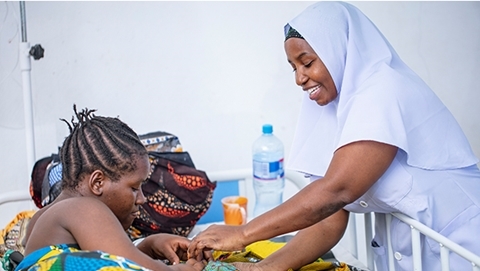
First developed in Tanzania in a single District in 2013 and in a Region from 2016, it reached national scale in 2023, followed by Lesotho in 2024. m-mama addresses one of the most significant barriers facing pregnant women and newborns in many underserved communities: access to urgent emergency transport when life-threatening complications arise. By combining a digital dispatch system, organising existing ambulance networks and recruiting volunteer community drivers, the programme helps ensure women and newborns can reach appropriate care quickly, including in remote areas where formal ambulance services are seldom unavailable. According to Vodafone Foundation, around 70% of the world's maternal deaths occur in sub-Saharan Africa, where delays in reaching emergency obstetric care remain a significant challenge.
Today, m-mama is recognised as one of the largest and most affordable emergency referral systems of its kind in Africa. Its success has been driven by a model that embeds government ownership and sustainability from the outset, ensuring integration of the service into national health systems and budgets, rather than relying indefinitely on donor support.
Joakim Reiter, Chief External and Corporate Affairs Officer, Vodafone Group and Vodafone Foundation Trustee, said: "Hundreds of thousands of mothers, babies and their families in Tanzania and Lesotho can testify to the effectiveness of m-mama. Vodafone Foundation is increasing its efforts to engage governments and funders to secure m-mama for even more mothers and babies across Africa."
From innovation to infrastructure
The milestone was recognised during a panel discussion hosted by Vodafone Foundation at Goals House entitled From Innovation to Infrastructure. Moderated by Nina Lisa Felton, Managing Director of Vodafone Foundation and Nina dos Santos, Director, Freuds Group, the session brought together Dr Ntuli Kapologwe, Director General of the East, Central and Southern Africa Health Community; Hon. Ummy Ally Mwalimu, Presidential Advisor and Head of the Secretariat for the African Union Champion for the Maternal and Child Health Initiative, Luc Laviolette, Head of Secretariat of the Global Financing Facility at World Bank Group; Dr Karlee Silver, CEO of Grand Challenges Canada; and Carrie Cafaro, Global Director of Strategy and Delivery for m-mama.
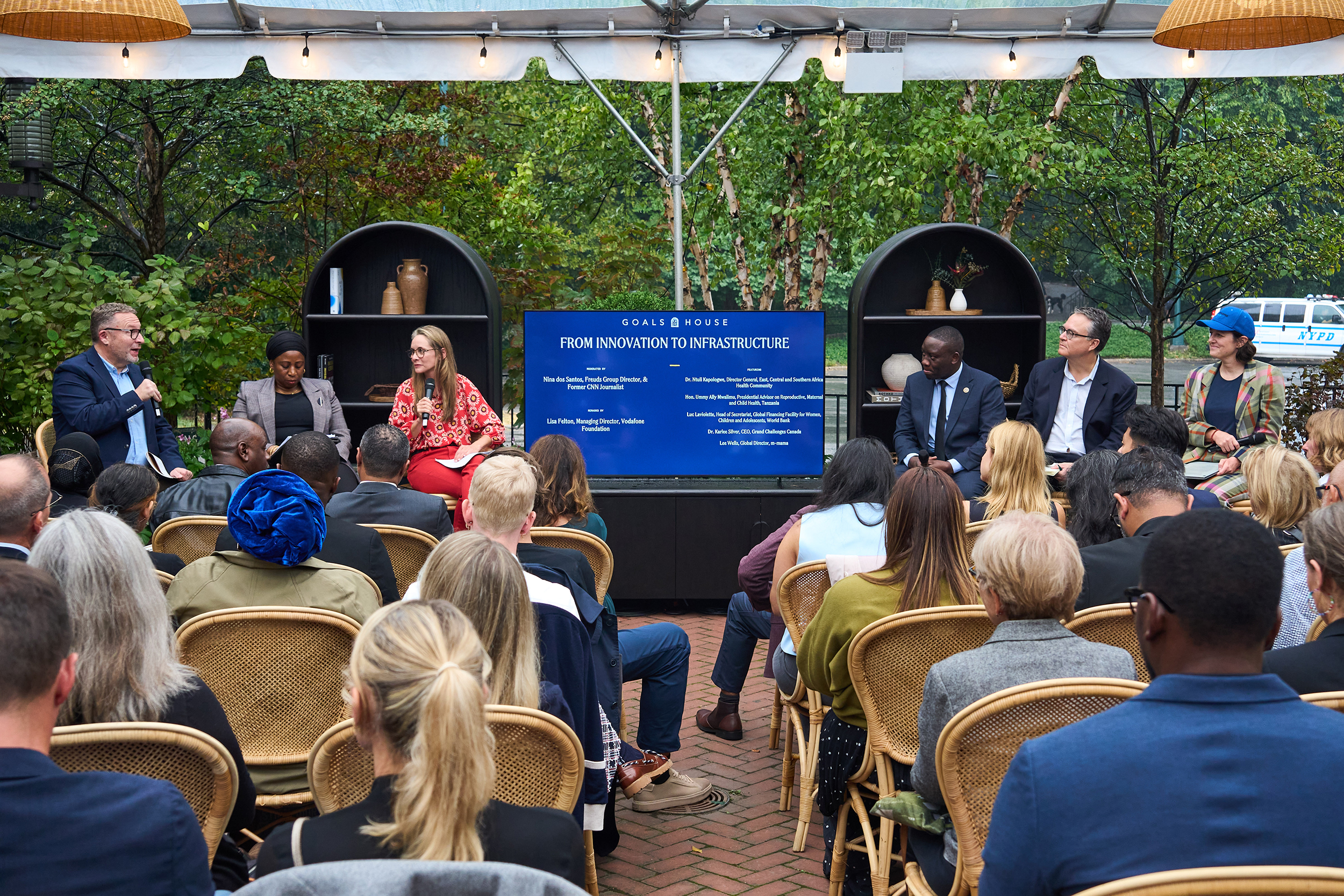
Lee Wells, Hon. Ummy Ally Mwalimu, Nina dos Santos, Dr Ntuli Kapologwe, Luc Laviolette and Dr Karlee Silver during Vodafone Foundation's From Innovation to Infrastructure panel discussion at Goals House during UNGA 2026.
Panellists discussed the critical ingredients required to achieve sustainable scale, including political leadership, co-design with governments, strong evidence of impact, catalytic philanthropy and financing models that support long-term adoption. A central theme throughout the discussion was that sustainability must be built into a solution from the beginning rather than considered once programmes have already reached scale.
The conversation explored how governments, funders, technology partners and implementing organisations can work together to transition successful innovations into nationally owned systems. Contributors highlighted the importance of embedding programmes within existing health systems, ensuring governments are equipped to fund and manage operations over time, and creating the incentives necessary for proven solutions to achieve widespread adoption.
Dr Ntuli Kapologwe, Director General of the East, Central and Southern Africa Health Community, said: "What makes m-mama unique is the insistence that governments design, own and financially sustain the service from day one. Many efforts fail for lack of transition to government, so beginning with government ownership is clearly a superior approach. This is a model for development, delivering proven results, and this is why I am championing m-mama for other countries."
Looking ahead
As m-mama continues to expand, Vodafone Foundation and its partners are calling for greater collaboration between governments, multilaterals, philanthropies and the private sector to ensure that more proven health innovations can achieve sustainable scale.
The programme's journey from pilot project to government-owned infrastructure demonstrates that technology-enabled solutions can improve maternal and newborn health outcomes at scale when they are designed around local ownership, embedded within national systems and supported through strong partnerships.
With 250,000 emergency transports now completed and a growing number of countries adopting the model, m-mama is helping to demonstrate that preventable maternal and newborn deaths can be reduced through practical, scalable solutions that place governments and communities at the centre of long-term change.